How to Practice Dubbing at Home with a Rythmo Band
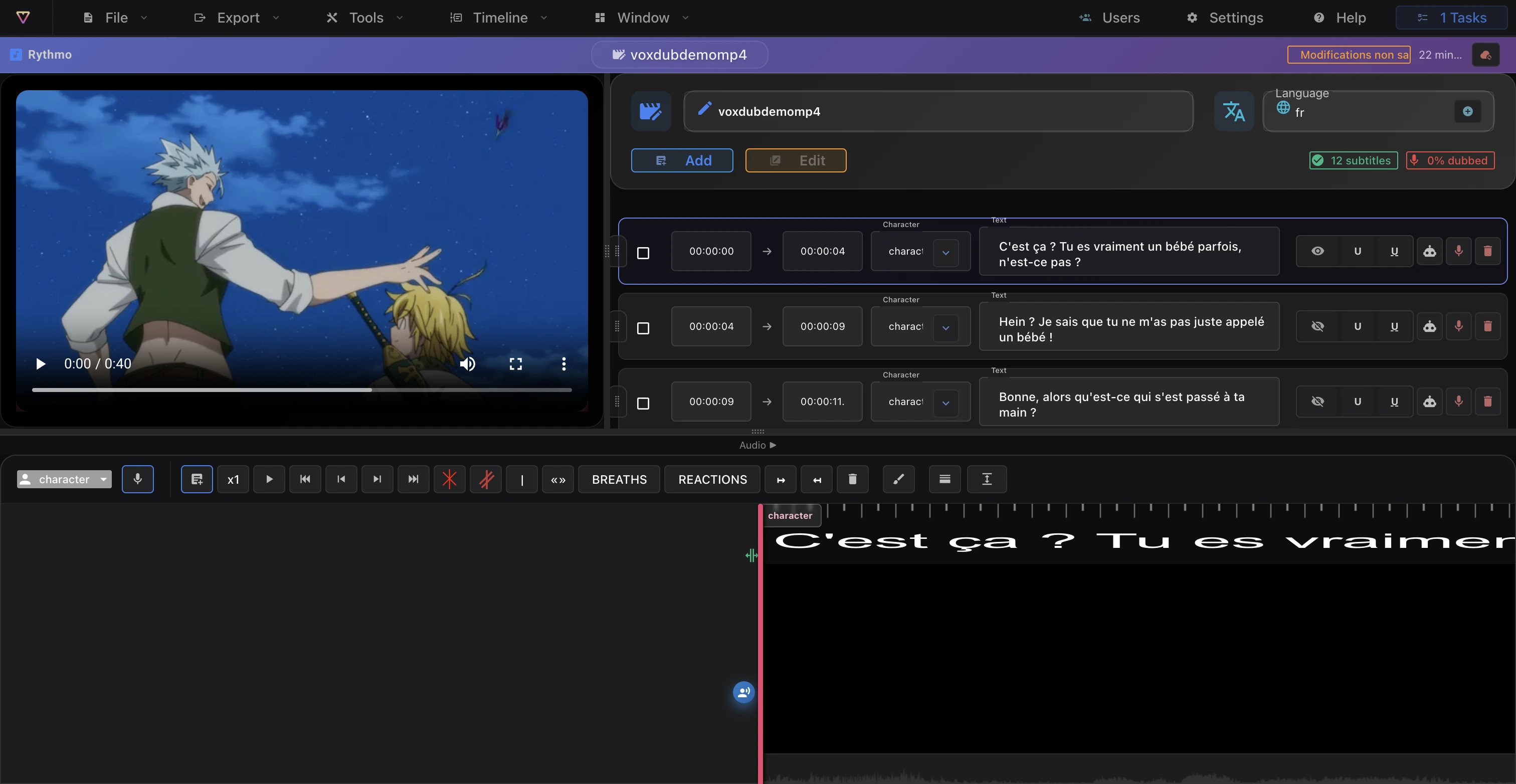
To practice dubbing at home, take a 30 to 60 second scene, put its text on a rythmo band and record your lines in short loops. You need a browser, headphones, a simple microphone and short but regular sessions. Here is the routine, step by step.
What you need
- A computer with a browser.
- Headphones, so the video sound does not leak back into the microphone.
- A simple microphone: a headset mic or an entry-level USB mic is enough.
- A quiet room, with fabric (curtains, a rug) to limit echo.
You do not need a studio to improve. What makes you improve is repetition and listening critically to your takes.
Step 1: pick a short scene
Take a 30 to 60 second clip with one or two characters, a medium pace and clear emotions. Cartoons and anime work well for this exercise: the mouth is easy to read and the acting is bold. Keep the same scene for several days in a row. You measure progress better on a text you know.
Step 2: build your rythmo band
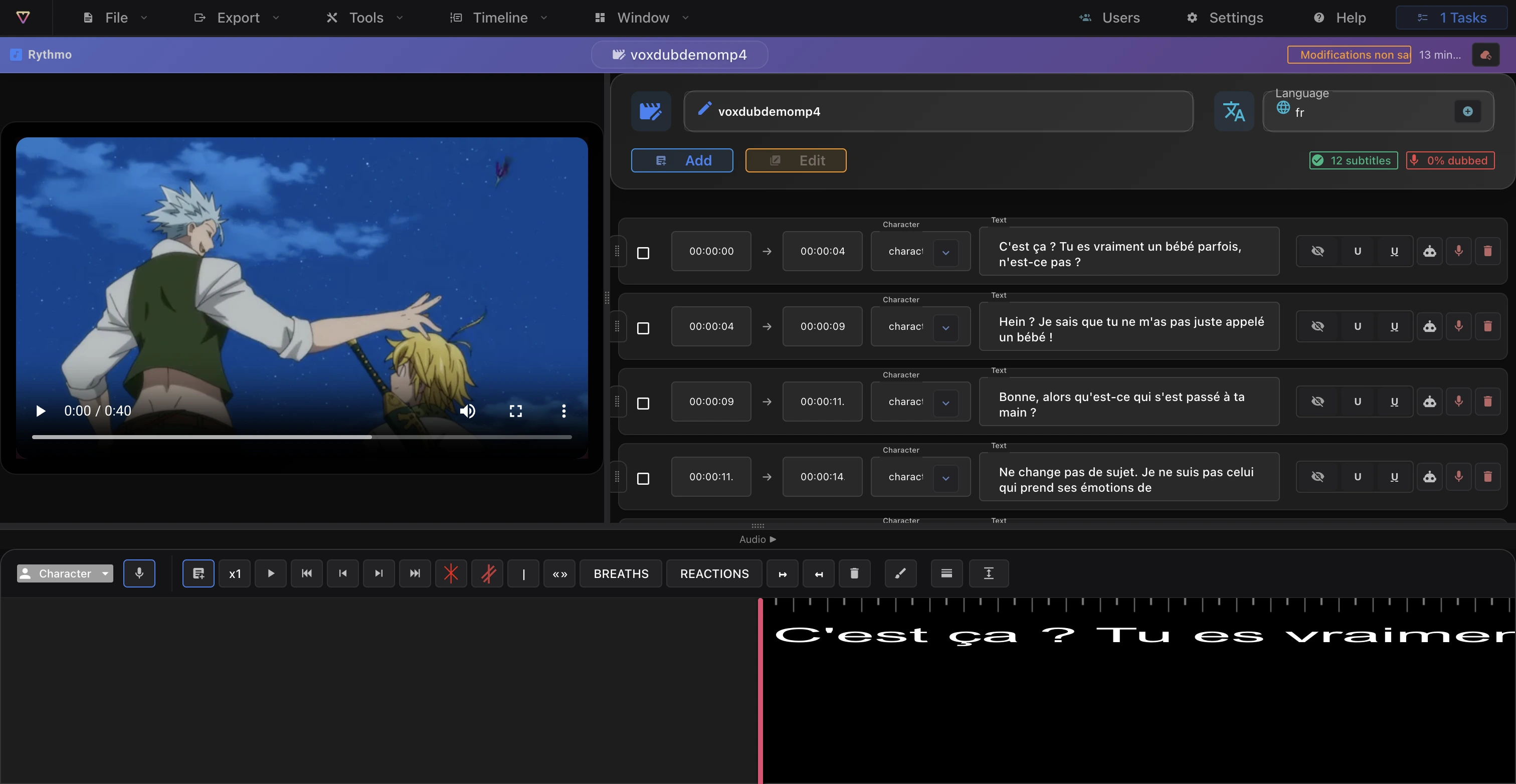
Where do you find rythmo bands to practice with? The simplest way is to build one from any video. In Voxdub, import the clip and tick Transcribe the dialogue: every spoken line is written on the band, aligned with the picture. Fix the text if needed, then assign a character to each line.
The rythmo band scrolls under the video. You read each word as it passes the marker. If the text scrolls too fast or too slow, adjust it with the guide on text size and scroll speed.
Step 3: record in short loops
Place a recording loop on one line or on a small group of lines, then repeat that loop:
- Listen to the original two or three times. Note the intention, the breaths and the pauses.
- Read the band out loud without recording, to settle your pace.
- Record the line. The take stays attached to the line and its character.
- Listen to the take with the small player on the line. Record again if a word lands late.
Move to the next loop only when the sync holds on three takes in a row. The recording controls are described in the help article Record your voice.
Step 4: work on one point per session
Each session, set a single goal:
- Timing: the start and the end of the line land with the character's mouth.
- Articulation: the labials (b, p, m) land on the mouth closures.
- Acting: reproduce the intention of the original, then try a different intention.
- Voice: change pitch and pace to hold two characters. The method is in dub a scene with two voices or solo.
Step 5: listen back once a week
Export a version of the scene and compare it with the previous week's version. Offsets, loud breaths and swallowed words are easier to hear on an export than in the editor. For background noise, run Enhance your voice in the Tools menu: it is a noise reduction pass on your takes.
A sample one-week routine
- Days 1 and 2: one scene, timing only.
- Days 3 and 4: same scene, articulation and labials.
- Days 5 and 6: same scene, acting and intentions.
- Day 7: export, compare, then a new scene.
Sessions of 20 minutes are enough if they are regular. For a first complete project, follow the fandub for beginners guide.
Frequently asked questions
Where can I find rythmo bands to practice with?
Build them yourself from a video you like. Voxdub writes the dialogue on the band at import, and you adjust the text. You can also work on the band alone, without the picture, as explained in dubbing from a rythmo band alone.
Can I practice dubbing without a professional microphone?
Yes. A headset mic or a simple USB mic is enough to work on timing, articulation and acting. Keep one hand's width between the mic and your mouth, and stay in a quiet room.
How long should I practice each day?
20 minutes every day beats one long session a week. Dubbing needs an ear and reflexes, and both are built by repetition.
Is Voxdub suitable for beginners?
Yes. You import the video, the band is built from the dialogue, and you record line by line in the browser. The trial lasts 7 days and requires a bank card. After that, the subscription costs EUR 12.99 per month. For your first steps, also read amateur dubbing: how to get started.
Start your first session
Import a short scene, build the rythmo band and record your first loop today.
👉 Practice dubbing with Voxdub: 7-day trial, then a subscription with no commitment.